I have a couple of mules that detest being paste-wormed; yet another mule loves it so much she will devour the entire tube, including the syringe, if allowed. Keep in mind, I’ve been doing this for over 50 years; this is what works.
Mules that are sour on being paste-wormed is partly due to having a syringe shoved into their mouth, the icky taste, and there was no reward offered. The handler may be nervous and that makes it more difficult.
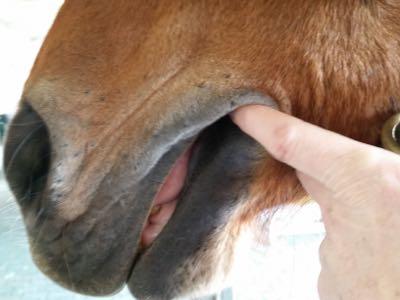
Simply play the finger game with your mule. Apply molasses or apple sauce to your finger and slide it into the corner of your mule’s mouth. Do not rush this, give him time to think about it. Since mules are individuals, one mule may prefer apple sauce or jelly, and another mule may prefer molasses or just corn oil on your finger.
Next, reward your mule for being cooperative in the finger game. Let him nibble oats out of your hand. Mules will come off the pasture for oats.
Now that your mule is quiet and ready, keep a small cup of oats ready to use as a reward. Simply, slide your “juicy” finger into the mule’s cheek, shoot the paste and slide the syringe out WHILE messaging his throat latch to encourage swallowing the paste. If you allow the mule to open his mouth, he will opt to spit out the paste wormer. After swallowing, offer the oats, or apple sauce, as a reward and keep messaging your mule and telling him how good he is.
When grooming your mule, keep things positive by offering a handful of oats for him to nibble from your hand.
Mule Memo: Developing good habits. The median amount of time for humans to develop a good habit is 66 days. A mule? Let’s just say the mule has a head start when it comes to developing a habit, whether it is good or bad. That’s why you want to focus on good ground manners so your animal is safe to be around. One habit in particular is: when stepping up into the saddle, make sure your mule is ok with this and not feeling anxious. Sometimes it may take a few seconds to squeeze the crest of his mane to reassure him that everything is fine. The mule’s mother (the horse mare) did this very thing by massaging the young mule’s crest on top of his neck. In equine language, this means “I’m here, and everything’s OK.” Once you are in the saddle, sit back and relax. Don’t take off – or in a couple of weeks, your mule will take advantage of knowing what comes next, and he will charge out down the trail. Even though you didn’t encourage him to bolt out (or did you?), a level-headed mule waits for his handler’s signal or request. Some riders like to ride their mules as though they are on a NASCAR track, and others like to mozey along. I like for my mules to have good manners and still be able to giddyup when needed without developing anxiety. I hope this helps. If you need assistance, you know where to find me.
It’s proven, mules mature physically and mentally at a slower pace than horses do. Generally the mule’s height will be one to two inches taller than his dam, the horse mare. Being hybrids, it is also proven they are smarter than both their parents. Yes, that means they are smarter than the horse (a given, because horses never ask to see your resume) and they are smarter than the donkey, who is a thinking machine of their own species.
While some mule owners get impatient about the training process, that is when the roadblocks start showing up in their schooling efforts. New mule owners tend to get stuck, they made it past the sniff test, but reading their animal is a complex issue.
Building a solid foundation in your mule’s training is so important. You want an animal you can depend on; one that won’t blowup when the going gets rough on the trail. You want an animal that is confident and attentive to you, his handler. You want an animal that will respond to your cues and move forward when asked. Every time you step up into the saddle, you are taking a risk. Do yourself a favor, make sure your skill set matches with your mule’s. Build on your partnership, because whether you realize it or not, when owning a mule, you are in a relationship, and things can get personal when a disagreement comes along.
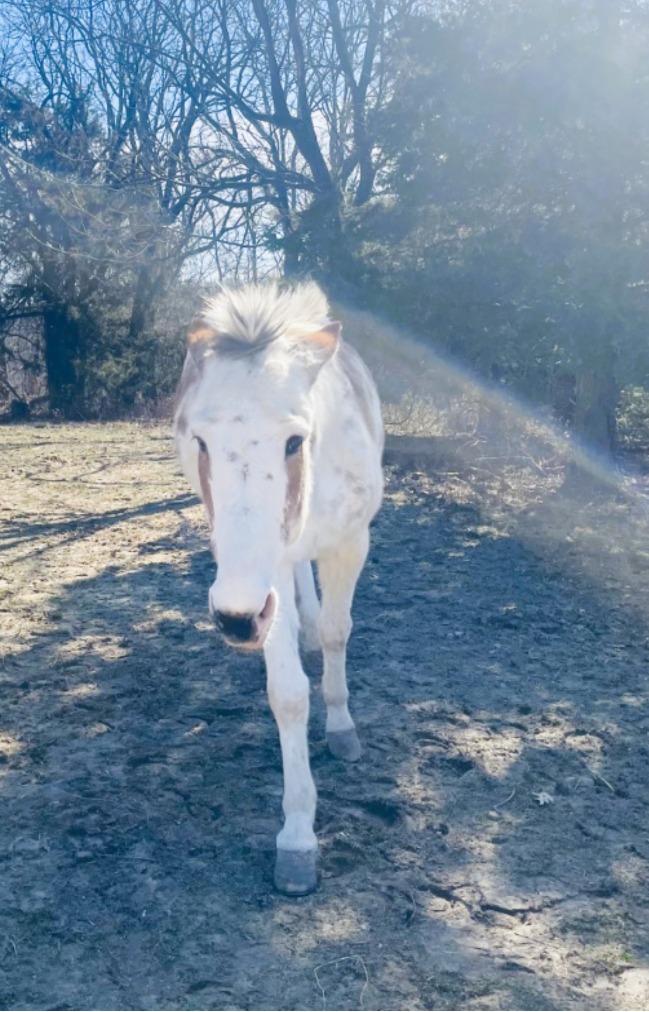
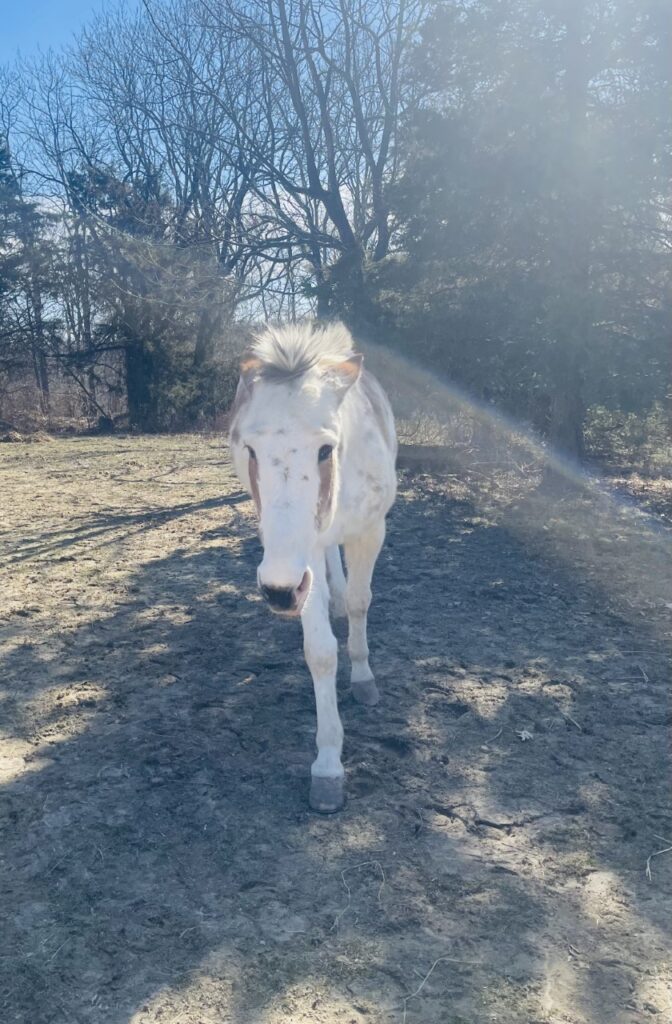
To make a point about reading your mule accurately, and definitively: The mule in the above photo, “Cabo” is walking towards me after I called her name. Cabo is very expressive, reading her body language has been very interesting, and a huge learning curve in my working with mules over the years. Horse people typically misread this expression as being unhappy or aggressive. This mule is showing a sign of submissiveness. Can you imagine if I misread this mule and “punished” her for merely wanting to come near me? Since this photo was taken, this mule has gained confidence and now walks up to me in a confident and relaxed state of mind.
Realizing the time and effort it takes to put into a mule’s training may cause some handlers to give up. Mules are thinking animals; they process It’s intimidating when you realize how quick a mule learns, And, you will make mistakes. You have to make mistakes, in order to learn.
Mules are amazing. They are individuals. They don’t take to bullying tactics. Mules comply to their own barnyard rules of conduct, known as the pecking order. In this scenario, size doesn’t matter. The 2,500 pound draft mule is generally easy-going and follows through with the herd boss. What matters is the herd will stick together; this makes the herd structure stronger and well protected from predators.
Now, this mule has more confidence and is relaxed.
Stick with me, there’s a lesson here: you can spend a lifetime with equines and still not know everything there is to know. That statement should humble you. Yes, God gave us dominion over animals. That dominion doesn’t include abuse or neglect. So take your time and do what is needed at the right time. Skipping steps in your training will show up later when you need your mule the most.
I will leave you with this thought; living in a push button world of convenience, mule handlers tend to cut corners. A trainer made a statement years ago that stuck with me, “You cut cows, not corners.” And now you know why.
The Smiley Face of the Mule – is often mistaken for aggression when it’s not.
The mule in the photo, “Cabo” is walking towards me after I called her name. Cabo is very expressive and reading her body language has been very interesting and a huge learning curve in my working with mules over the years. Horse people typically misread this expression as being unhappy or aggressive and even as a sign of confusion. This mule has been heavy-handed by a trainer that broke her out several years ago. The mare mule is very smart and learning her body language has been fascinating to me.
Having figured out Cabo’s past handling has enabled me to realize that this facial expression is more of submission, saying I am coming to you. Her head is lowered, her lower lip is relaxed and her ears are gently laying down – not pinned back as you would expect in an angry mule or horse.
Of course, after Cabo walks up to me, I place the rope halter on her first, and then she gets a graham cracker as a reward. I then bring her through the gate to saddle up and go to work.
A recent blurb from Lea Lansade, PhD, at the French Horse and Riding Institute in The Horse newsletter, explains:
Much equine research has focused on the communication of negative emotions. It’s time to give thought to what constitutes the expression of positive emotions in horses, says Lansade. And that, she says, we can see in their “smiles.”
“Horses have relatively complex facial muscles that allow them to have a wide variety of facial expressions, almost what we’d see in most primates,” Lansade says. “As scientists, we can’t really use the words ‘smile’ or ‘happy’ referring to animals, but when you look at the facial expression of a horse with positive emotions, that’s essentially what we’re seeing.”
Happy horses create the “equine smile” by half-closing their eyes, stretching out their upper lips, and pointing their ears backward, almost in line with the nose, she says, based on a new study her team just released about desirable grooming techniques. Sometimes they keep the upper lip still; sometimes they twitch it a bit. In combination with that smile, they usually lift or tilt their necks slightly.
“It’s not enough to avoid negative emotions in our horses; we need to be actively seeking signs of positive emotions, as well,” Lansade says. “If we can read their body language, we can recognize what makes them happy.”
Your mindset depicts on how you view the world, your environment, the people you interact with; in other words, it portrays your ability to process information. Keep this in mind; mules are very adamant in their thinking. It’s black and white, accepting or not; and this is why mules are referred to as being strong-willed. If you use the word stubborn, you can add single-minded to the following list of undesirable traits found in some equine trainers:
Balky
Bloody-minded (those British are humorous aren’t they?)
Bullheaded
Cantankerous
Contumacious (yes, I had to look this one up)
Firm
Hardheaded
Insubordinate
Opinionated
Persevering
Pertinacious
Pigheaded
Rebellious
Recalcitrant – go ahead, look it up. 😉
Refractory
Self-willed
Set in one’s ways
Stiff-necked
Unbending
Unmanageable
Unreasonable
Unshakable
Would you choose a trainer with these traits to work with your mule? And, after hiring a trainer to work with your mule, are you involved and participating as well? If not, you would be wise to be involved with your mule’s training. You see, mules develop quirks from a negative incident that the mule willnot forget. Even though mules are forgiving of your mistakes, a mule knows if you are working with him or not. Successful mule handlers recognize each mule as an individual and address challenges in a resistance-free approach. Successful mule trainers know that choosing the shortest training process to get results doesn’t produce a safe and willing mule. So the 30, 60, 90 day rule of horse training will not apply successfully with mules. Developing a partnership is the most desirable and successful training method to use when working with mules.
Oh, the undesirable traits listed in this article? My grandfather was in charge of the mules in the U.S. Army Cavalry back in 1924. Yes, he was a mule-skinner. He wasn’t nice about his training methods either, when working with the mules. Chauvinistic and domineering, he smoked horrible-smelling cigars and he loved his whiskey. Yes, I was introduced to his rough start at mule training. However, I spent a lifetime of learning how to work with mules in a positive way. So, as a result, we can learn from the abusive training techniques that were used and become successful mule handlers during this process.
We can check our attitude before we put our boots on to head to the barn. Make sure your heart and mind are in a good place before you leave your front porch. Before my feet hit the floor in the morning, I thank God for another day and for blessing my life with mules. My heart and soul belong to the mule.
Working with a mule that is distracted; it can easily be a herd member calling out to another when working with your mule in the round pen. Or it can be, that he’s very aware of new things that have been moved around the barn, a baggy blowing in the breeze…you get my drift. Some mules quickly look for the exit door when learning a new task requiring intense concentration. Knowing this, I keep the lesson short and reward on the slightest try. The focus here is keeping things favorable for the mule. Mule trainers recognize this and implement the resistance-free training methods with the reward system.
Performance-bred mules are quick on their feet. This mule was a challenge to keep focused on learning a new task.
As mule trainers, we know how to work around livestock. The work is never easy but that’s why we do it. Sure, you sweat when training a horse, but horses can be pushed around, mules simply won’t tolerate it. It takes a mindset to work with them, the mind games, testing you, questioning your resume… every day is like appearing on a game show, going up against the champion.
Well pal, it’s like this. You signed up for this. There’s no whining, and you have the tenacity and grit to do this. As a trainer, you know that working with clients in the mule industry is demanding. You are putting your reputation on the line. It’s part of the job, it goes with the territory and you choose to be a winner.
As mule trainers, it is important that you recognize a distraction as just that, a distraction. When working hard at a project, we are emotionally involved and focused on getting the job done in a timely manner. If family members are involved in our work environment, we could be challenged with a situation, and things can get difficult. Criticism is not well received when working hard, feeling pressured, and pushing yourself to succeed. Not only are you dedicated to your work, but you are sincere, on the level, and forthright about your career moves. You play by the rules.
Well, not everyone plays by the rules. And now, it can get sticky. Aside from not liking it, you are aggravated in the process and the pressure takes over to a point where you feel like lashing out or calling him or her out. In the Old West, when calling out someone, you would meet your rival out in the dusty street with your six-shooter strapped on. You took up playing the piano to keep your trigger finger ready. Hmm…
Truly, in today’s world, this is a distraction to your success and doesn’t deserve your time and energy. Distractions are such energy drainers, that your time is better spent on moving forward with your business plan. As professionals working in the mule trade, we strive to focus on the things that matter most. We are concerned with:
Round pen training is ideal when introducing a new task to the mule.
Positive growth in the mule industry.
Moving forward and keeping our energy positive.
Keeping business records current and organized.
Taking time off when needed to refresh our own business persepctive.
Staying committed to our training program.
Training mules through an honest approach and not by trickery or deceit.
Respecting livestock and providing care for them.
Developing a partnership with our mules to gain their trust.
Working with clients in the field, one-on-one to address their concerns.
Living and working by a code of conduct that builds on our integrity.
Renewing our strength to remain driven and focused.
Documenting what works and learning from our mistakes.
Positively using the social media platform in a positive manner to promote the mule industry.
Surrounding ourselves with friends and family that support our dreams.
Passing on our knowledge to others in hopes they will keep our mule legacy ongoing.
Establishing a reliable team with a skillset in training mules, to assist when needed.
Being supportive to others in the mule industry.
Challenging ourselves to perform better.
We can easily become hard on ourselves for different reasons. Working as professionals in the mule industry is not easy, but we accept the challenges and have a work ethic. An ethic we are proud of.
Your strength and commitment is needed. It’s not all glory and glamour, we know this. It’s tough, the entire mule industry requires a winning attitude. Your passion for mules will drive you. You’re the one that our youth look up to. They want to be just like you! Your high-profile and notariety is recognized. Your character is exceptional and you reflect on your potential and ability to remain positive in the mule industry. Stay focused, maintain your integrity, and don’t allow distractions to overcome your own success…the mules need you.
It’s proven, mules mature physically and mentally at a slower pace than horses do. However, being hybrids, it is also proven they are smarter than both their parents. Yes, that means they are smarter than the horse (a given, because horses can be forced or bossed around into doing a task) and they are smarter than the donkey, who is a thinking machine of their own species.
So, while some mule owners get impatient about the training process, that is when the roadblocks start showing up in their schooling efforts.
Everyone wants to be at the top. The time and effort put into the equation may cause some people to give up. Because with time and effort, you will make mistakes. You have to make mistakes, in order to learn. You might make a career change and try something new, or you may become hard on yourself for not making accomplishments at the pace you so desire.
And, slamming someone for their own mistakes is not a part of the working solution. As humans, we can get better at our work…provided we learn from our mistakes. Quite simply, if we don’t learn from our errors, lessons are repeated until they are learned! That’s the Karma wrapped up in the Universe. It’s a big world out there and the Universe is endless.
As trainers or instructors in the mule industry, we don’t start at the top. At times, we will fail. We desire to show our best videos and photos that make us look like mule superstars, never do we show our bloopers. Dang! That opens the gate for “Keyboard Karens” to cut us down! Which brings to my mind the real fascinating stuff to this article.
Mules don’t take to internet bullying tactics. They have no interest in “Keyboard Karens” and they don’t show off muscle or “strength” to impress themselves or in an attempt to get outside approval. Mules comply to their barnyard rules of conduct, known as the pecking order. In this scenario, size doesn’t matter. The 2,500 pound draft mule is generally easy-going and follows through with the herd boss. What matters is the herd will stick together; this makes the herd structure stronger and well protected from predators. Stick with me, there’s a lesson here: mule trainers, instructors, and riders with integrity, show respect for other trainers/riders and offer assistance where needed. They won’t slam others and they show a high regard for others wherever their journey takes them.
As a side note: you can talk bad or take a slam at them from your keyboard as often or long as you want on social media. You know what? You just made an ass of yourself. And yes, the pun is intended. (wink.)
An interesting concept is status. Mules being as independent as they are, know where to hang their hat. They mingle, hang out, and move around in the paddock and pasture, to where it benefits them. They figure out herd dynamics quickly and make it all happen for them. For the mule, it’s all about him or her. Mules get this. They get the status thing and use it to their advantage. Dang! How cool is that?
So, where you hang your hat, is crucial for mental and physical health. So yes, status is everything.
Understandably, prolonged periods of feeling like you’re low status can thus lead to illness and depression. If your serotonin remains diminished for a long enough time, you’ll also become angry and may even feel the urge to violently lash out at others. This is not cool. You really need to take a time out and hang with the mules.
So, this status thing…unfortunately, there is a fair share of unscrupulous “business people” that muddy up a sector of the mule industry. This is nothing new, so watch yourself.
Just as you have an ingrained desire to seek status, others do too, and part of that drive is to connect with high-status people. As your confidence grows, your network of friends and peers will reflect as being positive growth. Remember, status isn’t just about looks or wealth, so this isn’t a purely superficial attraction. Both men and women want to befriend and partner with a guy who brings all kinds of valuable things to the table, whether that’s intelligence, wit, loyalty, or skill; everyone wants high status and hardworking people on their team.
And the mules; don’t want a deadhead on their team or a troublemaker. They go by their rules of conduct in the pasture and around the barn. Mules are good about the status thing. I admire mules that can detect dishonorable intentions faster than the stagecoach that left the depot.
Running an equine business is a challenge. Just remember, developing status leads you down the trail of success; to making new friends, finding romantic partners, and building a rich social network.
And that is why I like working with mules. They will teach you to look deep into your heart and soul; they will humble you and allow you to have a deeper understanding. That’s the deal breaker right there. I think I will hang my hat, right here.
Here we are, let’s get at it! If you have questions, you know where to find me.
Start an emergency mule fund. Keep tucking away extra cash for an emergency that may come up unexpectedly. Be smart about this, stuff happens, and as you know, you can’t bubble wrap your mules or donkeys.
Clean out and organize your tack room. Use a broom to whisk away the cobwebs, wipe down your leather with conditioner, and cover your saddles/gear with a cover. Dust is destructive to leather.
Focus on riding with a purpose. If you don’t have a purpose, what’s the point? That comes from a mule’s perspective. Not having a purpose develops boredom in the mule, horse, or donkey. Yes, I know you ride for therapy, to get away, to get mule time in, but remember, you’re the leader. Develop your partnership between yourself and your equine. In other words, don’t be a knucklehead. (wink)
Create a plan for barn safety, such as eliminating fire hazards and loose boards. If you are a boarder, offer to help out and make a note of what is needed to keep the environment safe for your mule or horse. Contribute to a mule or donkey charity. And research the charity first to make sure they are credible. You’re doing good here, so keep moving on with the list!
Contribute to a mule or donkey charity. And research the charity first to make sure they are credible. You’re doing good here, so keep moving on with the list!
Build up your stamina and muscle by exercising 3-4 days a week. You don’t have to be a Ninja fighter; proper balance and controlling your moves will keep you in the game longer. Moving up and down stairs several times is the simplest and easiest way to develop your agility. My secret weapon is 5-pound weights. I do 25 repetitions of curls, and 10 repetitions of the overhead shoulder press. I will do 10 sets each day and it works for me.
Read a mule/donkey book from a trainer or professional you look up to. If you want to be entertained while reading on your favorite subject, pick up one of my books, they’ve been grouch-tested! (wink)
Attend a clinic either as an auditor or rider. There’s always something to be learned or shared with others. There are many podcasts and online clinics you can attend to suit your needs. So many choices!
Stay positive and celebrate your progress. Surround yourself with friends and family that have a healthy outlook and support your dreams. This is all good stuff here, keep moving, you got this!
Learn to refine your aids (seats, legs, hands, etc…) Remember those Ninja moves you are working on number five on this list? This will help you to be able to strengthen your body and sharpen your riding skills. I see so many riders with poor posture, riding slumped over in the saddle. One false move during a ride, and bam! You’re dumped!
On those non-riding days, get involved with horse board games such as: The Fantasy Ranch board game allows you to build and manage your own dream stables. This ranching horse board game includes three different levels, making it great for people of all ages. Herd Your Horses is an exciting board game that lets you play from the rancher’s or horse’s perspective. Horse Sense is a board game that will test your own horse knowledge. Throughout the game, you will learn about horse care, health, breeds, and riding. With over 200 hundred horse fact questions, your horse skills will be put to the test. This board game allows you to expand your horse knowledge while testing you on what you know. Gallop Home board game will put your equestrian skills to the test with this intricate board game. Players can try their hand as a horse trainer, with a full range and variety of skills to choose from. Horse Bingo board game, no matter your age, Bingo is something that you can enjoy playing. This rendition of Bingo takes it to the next level by incorporating horses into the game.
Keep a journal. Record or document your rides. Keep a record of time spent with your mule. I go back and read the journals I have kept over the years; it is enlightening to me, humorous, and so rewarding!
Here we are, the final round…make this a routine before your turn-in every night: Always check on the herd, say your prayers, and stay true to yourself. You’re worth it and we have a job to do. Remember, I’m counting on you.
My mule journey has brought to me amazing discoveries on what the mule is made of. As absurd as it seems, I cry for them, I pray for their well-being and I like to help others who are in need when working with their mules.
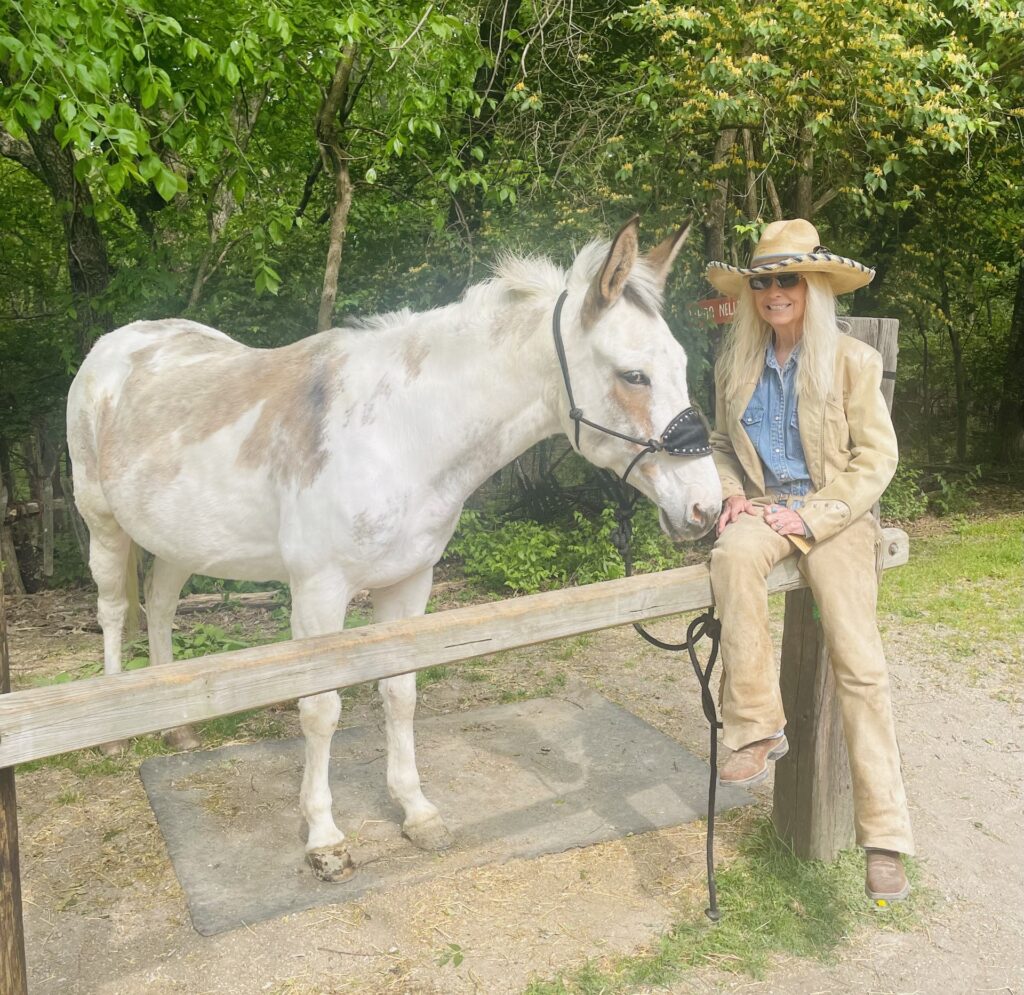
Cindy K. Roberts with Zan Parr Bar performance bred mule, Cache.
In 1985, I started working with mules and donkeys only; at that time I didn’t want to experience another sick horse on my farm and after losing two, I wanted a stronger equine to show and ride trails. I bought mules at an auction, broke out a couple of mules, and didn’t think it was all that tough to do. I didn’t think I was gifted, I merely thought most people didn’t take the time to study and understand the animal they were working with. Knowing that mules have a different mindset, I acknowledged it, accepted it, and worked with it… All this time, I have been captivated by the mule’s perspective and have been documenting my findings along the way. Looking for a way to develop a higher skill set, I bought mules at more auctions to fine-tune them or correct undesirable behavior issues. I bought mules that reared, kicked, and couldn’t be caught and I couldn’t get enough of it. Every mule I worked with was an individual and no two were alike. That is when I knew…I am now in mule college and I am not sure when I will graduate.
Using my creative mind has enabled me to work with a troubled mule, for hours on end. I took the challenge and went to work; the results were remarkable. The late Max Harsha once said, “Pack a sandwich in your hip pocket and strap a canteen to your belt, then go to work with that mule.”
I am passionate about my work and that means I can be emotional. I thank my lucky stars that God is in my heart because I am growing into a better person.
We are going to take an incredible journey; your outlook on life will change, and you will have laughter in your heart. Your mule will look at you differently. I will share with you how I developed a deeper understanding of my mules and how I worked at cracking the “mule code.” Now let’s go to work…
Remember, the mule is a mirror to your soul . . . Keep honesty in your heart so you like what you see and feel.