Trying to Connect with His Mule

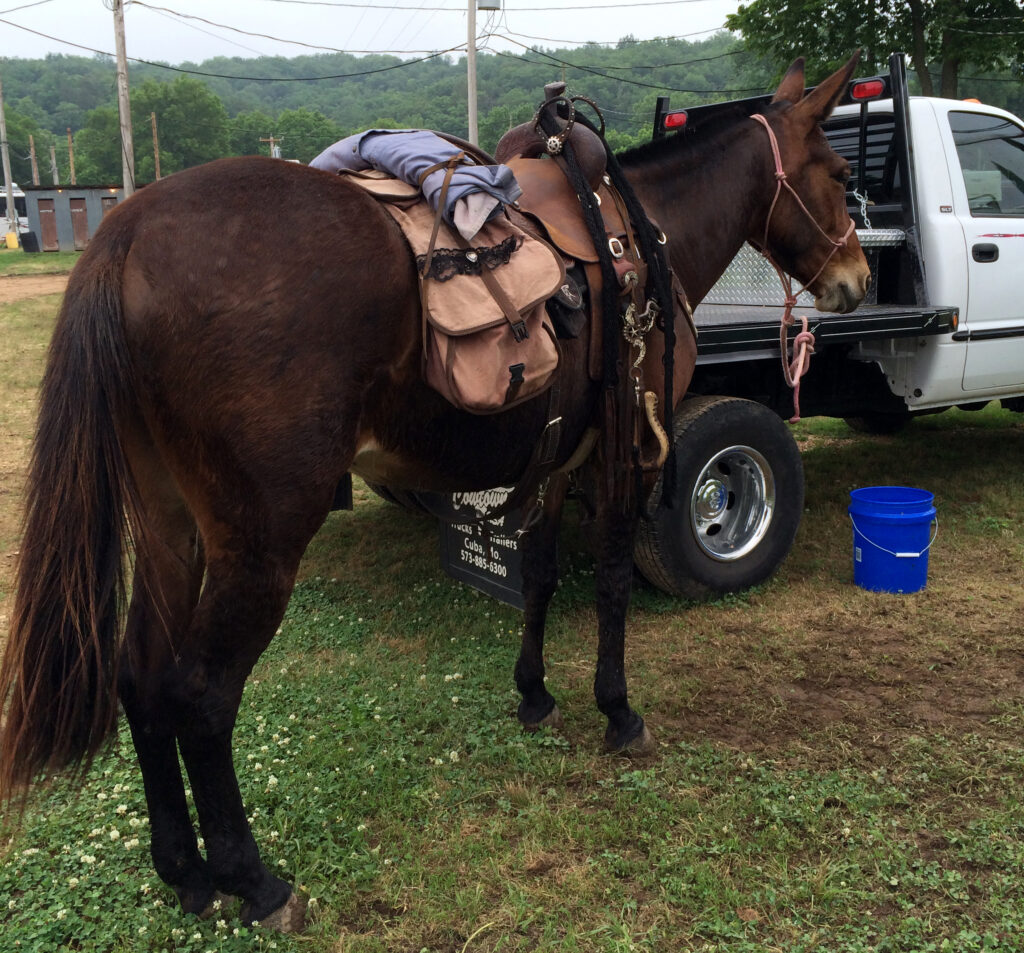
Cindy hope you are well. My mule is still having trust/come-to-me issues. I spend as much time with her as possible. She still will not walk up to me
unless I have a treat and then only to be able to get a treat and
retreat. She sees how we treat the other horses and pays attention to
them. No matter what I do the only way I can catch her is to verbally
” Lunge” her around the corral. At first, it took about 4 laps and then
she would stop and turn to me and let me walk up and rub her neck and take
her halter. The first time I just rubbed her neck and talked back to her
and released her. Then I put the lead rope around my neck so she could see
it. She moved off again but then stopped after one lap and let me catch
her. I then brushed her, led her around, checked her feet, talked to her,
and released her. I have altered my routine every time I catch her, she
never knows if I am only going to give her a rub and pat or if I am
going to lead her or brush her or ride her. She is riding great but
has some bridling issues that I will discuss later. That is the only
process that has worked for me. Any suggestions? Enjoyed the
book “Answers To Your Mule Questions” and plan on reading it again. You have a talent for writing.

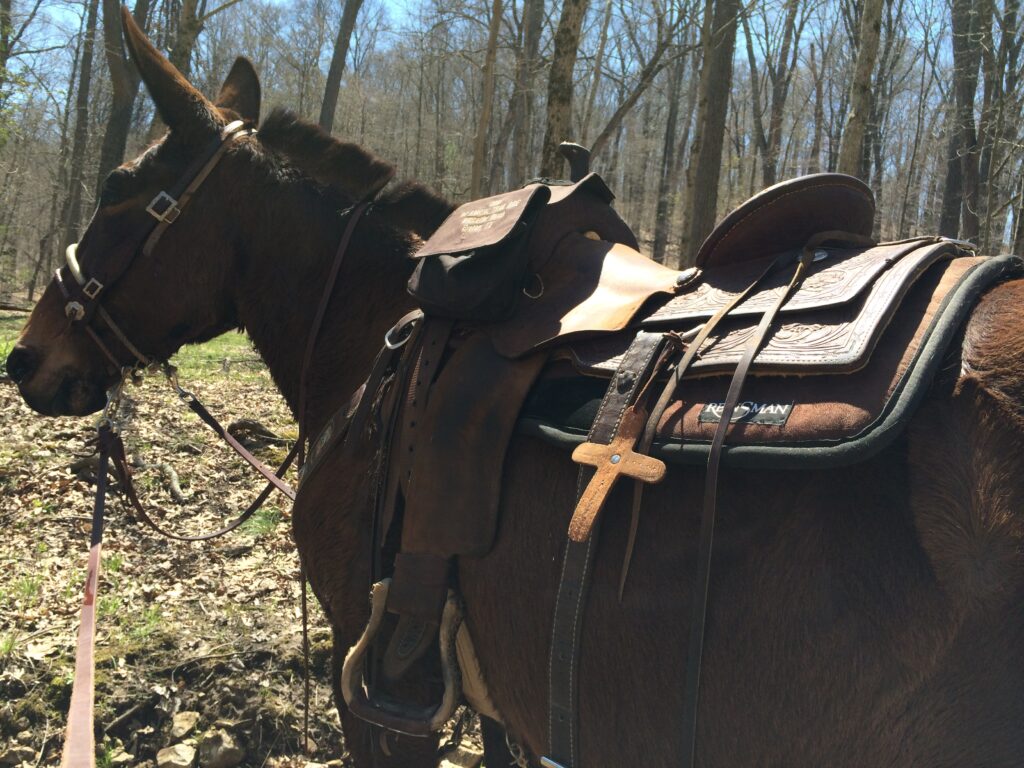
Does your mule hackamore come in different sizes? She has a pretty large
head and a regular bridle is tight. She still puts her tongue over the bit so I
plan on ordering the hackamore soon.

Blessings,

Name Withheld

Dear Sir,

I have worked with older mules that were very hard to catch.  I found it better to place the oats inside a bucket, then place the nose of the halter over the bucket, when the mule dips his/her nose into the bucket, scratch her neck (to desensitize) her at the same time.  Quietly and calmly, secure the halter and continue to feed her.  It is OK to have this routine established because the previous owner(s) have neglected to work with her with honest intentions.  This technique may take several tries to where the mule willingly will dip her head into the bucket and wait for the halter to be secured. 

There is another way that I prefer to use on haltering hard-to-catch mules. Having the mule in a corral or paddock, I will keep oats in a small cup tucked inside my jeans, walk up to the mule with the halter on my shoulder. Approach the mule, and for as long as he stands there, tell him what a good mule he is. Shake the cup of oats, to let him know you do have something for him. Offer the oats with your hand, by doing this, nibbling from your hand is a connection the mule makes; offering treats will often develop the bad habit of being able to dine and dash. They grab the “treat” and off they go.

Some mules are so unsettled they will not put their head in a bucket to eat. It just takes time for your new mule to feel secure in his new surroundings, but you will have to work with connecting with your mule, because after all, YOU ARE IN A RELATIONSHIP. So, make it a good one.

With older mules, it can take longer in repetitious handling/gentling techniques before they feel secure in forming a bond with their handler.  This is OK; remember, the mule doesn’t forget ill-treatment or deceitful techniques used in their schooling.  Feeding a treat, slapping on a halter then going to work is viewed as dishonest coming from the mule’s perspective.  There has to be a relationship.

Early in the relationship, by walking out to the corral, rewarding the mule for approaching and walking away is good.  Repeat this process. Always reward with a handful of oats, that way your mule can’t do the dine-and-dash maneuver by grabbing what’s in your hand and running away with it.

I have tossed oats on the ground to encourage a mule to approach me.  It takes more time with older mules to decide that you are OK, but with a positive and honest approach to their training, they do look for you to be their friend. 

Keep in touch — I want to know how this works out for you. 

~Cindy K. Roberts
We Are Mule Riders

  • We live independently by our own code.
  • We like our coffee strong, like our mules.
  • We know all external medicine is either waterproof, blue, or yellow.
  • We have no problem eating a sandwich directly after mucking the barn.
  • We know, why a thermometer has to have a string attached on the end.
  • We are not welcome in laundromats.
  • We don’t think anything sexual if someone talks about chains, whips or leather.
  • We can raise or lower our voice instantly by 5 octaves to shout at a mule when necessary.
  • We speak our own language; we use words that would even embarrass a teamster.
  • We would rather quit a relationship than our mules.
  • We take our mules everywhere.
  • We have better insurance for our mules than our truck and trailer.
  • We can define 20 different descriptions and causes for bulges on a mule.
  • We know more about our mules’ diet than our own.
  • Our mission is to create more work than our job. And we know that mucking a barn is the best cure for depression. Alright! You got this! Any questions refer to www.EveryCowgirlsDream.Com.

The Whoa-Mule Bridle

I don’t sell snake oil. I don’t promote quick fixes to mule issues. ​​​ I sell the Whoa Mule Bit/Bridle to work with riders/handlers with educated hands. That’s why I wrote the book, “Retraining the Hard-Mouth Mule” which comes with your purchase; not every mule is a candidate for the Whoa Mule Bit/Bridle. Every mule is unique and they deserve to be schooled and used in their best capacity.

~ Cindy K. Roberts 


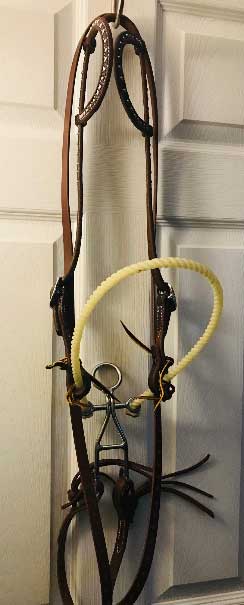
The hardware works underneath the jaw area on the mule.  When rein pressure is applied, the hardware applies pressure underneath the jaw working in conjunction with the noseband that pulls the mule’s nose back down to where it should be.

This is an effective piece of equipment to use in your training program. Once your mule has overcome his bit behavior issues, you can go back to using a bit that your mule likes or keep on using the Whoa Mule Hackamore bridle.  More mules prefer using the Whoa Mule Hackamore bridle over having a bit placed in their mouth.  Read how mule riders/handlers have benefited from using the Whoa Mule bridle! 
Available at www.EveryCowgirlsDream.Com

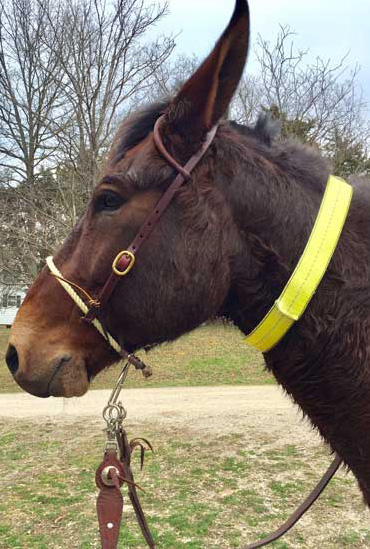
Whoa-Mule Bridle fitted correctly

My Heart & Soul…

My mule journey has brought to me amazing discoveries on what the mule is made of. As absurd as it seems, I cry for them, I pray for their well-being and I like to help others who are in need when working with their mules.

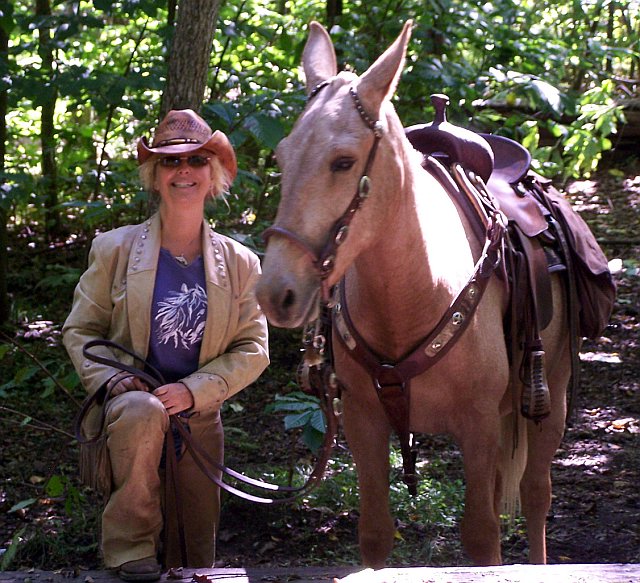
Cindy K. Roberts with Zan Parr Bar performance bred mule, Cache.

In 1985, I started working with mules and donkeys only; at that time I didn’t want to experience another sick horse on my farm and after losing two, I wanted a stronger equine to show and ride trails. I bought mules at an auction, broke out a couple of mules, and didn’t think it was all that tough to do. I didn’t think I was gifted, I merely thought most people didn’t take the time to study and understand the animal they were working with. Knowing that mules have a different mindset, I acknowledged it, accepted it, and worked with it… All this time, I have been captivated by the mule’s perspective and have been documenting my findings along the way. Looking for a way to develop a higher skill set, I bought mules at more auctions to fine-tune them or correct undesirable behavior issues. I bought mules that reared, kicked, and couldn’t be caught and I couldn’t get enough of it. Every mule I worked with was an individual and no two were alike. That is when I knew…I am now in mule college and I am not sure when I will graduate. 

Using my creative mind has enabled me to work with a troubled mule, for hours on end. I took the challenge and went to work; the results were remarkable. The late Max Harsha once said, “Pack a sandwich in your hip pocket and strap a canteen to your belt, then go to work with that mule.”

I am passionate about my work and that means I can be emotional. I thank my lucky stars that God is in my heart because I am growing into a better person.

We are going to take an incredible journey; your outlook on life will change, and you will have laughter in your heart. Your mule will look at you differently. I will share with you how I developed a deeper understanding of my mules and how I worked at cracking the “mule code.” Now let’s go to work…

Remember, the mule is a mirror to your soul . . . Keep honesty in your heart so you like what you see and feel.

Just about everything you need to know about mules…

On the trail, I meet a lot of riders who tell me they want to buy a mule for trail riding, hunting, packing, etc. Here are some of the things I find myself saying to them on a regular basis.

1. Mules will always keep you humble.

If you have a big ego and you end up buying a mule, your ego will be knocked down a few notches. Does your mule load into every trailer, no matter what, and do you like to boast about it? Do it in front of someone you just met and watch in disbelief as your mule suddenly forgets how to load. They will take every opportunity to make a fool out of you, so you better have a good sense of humor since you will be the brunt of all their jokes.

2. Mules will always keep you safe… if you can stay on their back, that is.

A lot of people have the misconception that a mule being their 1200-pound babysitter will keep them from all harm. The thing is, mules are very smart and have a great self-preservation instinct. They DO NOT in any circumstance want to get themselves hurt or to put themselves in a situation where they could die. They will keep themselves safe, whether you’re on their back or not. That includes jumping 30 feet sideways at a potential mule-eating bush or bolting away at a dead run from an angry water bottle/bicyclist/plastic bag/dog/whatever else could kill them. If you have a really good seat, you may not get hurt, but if you’re a rider getting back into the sport because you’ve been hurt/lost your confidence/lost your stirrups and confidence at the same time, you might be unpleasantly surprised.

A horse will jump off a cliff for you, but a mule will watch as you go plummeting off the edge while he’s sitting high and dry.

3. If you end up getting a mule so you have a pack animal that you can use for hunting, you might be disappointed when that said mule is petrified of the smell of blood.

Some mules will pack anything, some mules will lose their minds when they smell blood. Yes, most of them can be trained eventually to get over this but for the guy/girl that only rides twice a year: one to leg their horse up for hunting season and two for the actual hunt, you might be very frustrated and let down and you might even lose your cool so much that you will have the urge to hunt your mule instead of that deer.

4. Mules are not stubborn.

They are extremely smart and will a lot of times outsmart their owner. If you own a mule you will constantly have to be one step ahead of them and constantly be in a state of trying to outsmart them. It’s like conquering a video game, mastering an instrument, or something of the sort to me. Once you figure one out, each one will be easier and easier.

They keep me thinking and always impress me when they outsmart me.

5. Once you figure out your mule and your mule figures out you, you will realize why so many people have mules.

They become extremely loyal and trustworthy and their personalities are so enjoyable. Their surefootedness and brains under saddle will ease you even in the trickiest of trails. They will keep you laughing and bring a smile to your face even if you’re having a terrible day.

This is a post that has been shared on social media by Cross Country Equine.

Safe Holiday Decorating at the Barn

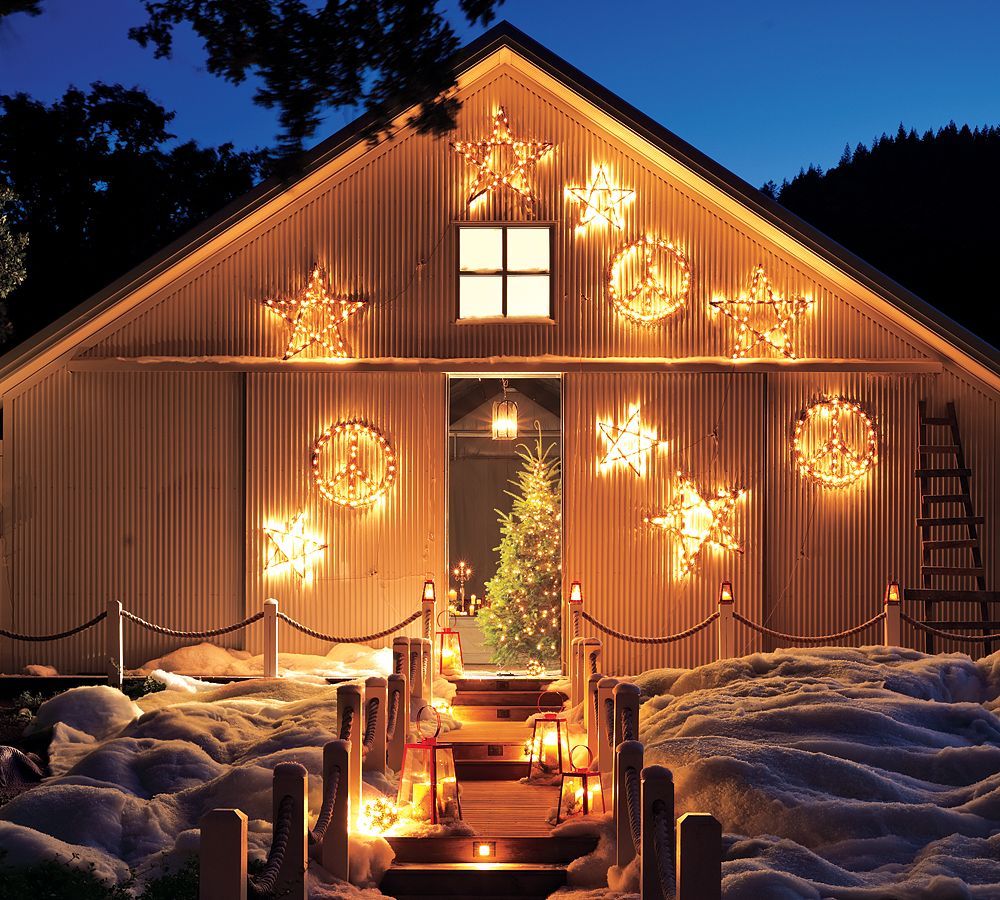
Decorating the barn for Christmas can be fun and creative; since that is our home away from home, why not? Sharing the holiday spirit with your equine is always special, and while you’re at it, don’t forget the horse trailer needs decorations too! A few things to be aware of, and then have a blast with the decorations!

When hanging lights, be smart about it. Remember, the newer, and more expensive, LED lights don’t heat up. Do not string regular holiday lights, as the dust, hay, and wood in the barn will just act as kindling. And you don’t want to create a fire hazard! Be aware of extension cords, as well. These can heat up, cause a trip for horses or humans, and also become an excellent treat for pests and rodents to munch on. Overloaded circuits are a recipe for disaster.

Know that mistletoe and holly, while festive and lovely, are toxic to horses, dogs, and cats! If you crave that look, go for artificial versions of these holiday favorites. Poinsettias are mildly toxic as well.

Stay away from tinsel and garland. This is too tempting for the barn cats to “hunt” these, then run down the aisle being followed by a long string of holiday spirit. When eaten by a curious horse, it might lead to a blockage. You don’t want a sick horse or mule because of this!

It’s also a great idea to keep all decorations away from the reach of equines. If your barn uses Dutch doors or stall guards, keep decorations far away, or just supervise when your horse can look around.

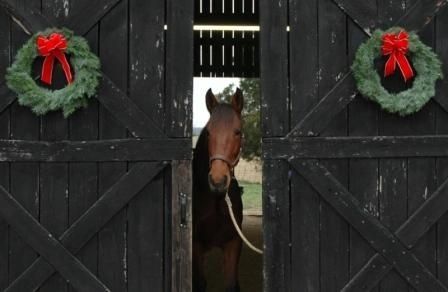
Some excellent options for decorating barns include wreaths on the barn doors, outside lights, and even sleigh bells. Most barn dwellers like horses, cats, and barn dogs won’t fancy a bell as a snack.

And use artificial plants, to avoid poisoning your pets and you have the benefit of re-using them! Additionally, any artificial pine will be better as it won’t drip sap everywhere!

Something tells me, you got this…carry on, and Merry Christmas.

Winterizing Barn List

It’s that time of year; you will want to repair or replace windows and doors and make sure they can close completely to keep out cold winter air and drafts. If you have a bathroom and/or heated wash rack, wrap the water heater with an insulated blanket. Hot water pipes can also be wrapped to help save energy. Refill under stall mats where needed, or haul in fill-in stalls without mats. Remove anything that’s not used during the winter like fans (blow off fan and motor with an air compressor), and any liquids that might freeze in an unheated barn like fly spray, hoof black, fence paint, etc. OK, you are on a roll.

  1. Harrow pastures. If you don’t have a harrow, use a pitchfork and break up manure piles.
  2. Spread manure and compost on hay fields and on pastures that are resting for the winter.
  3. Drain hoses and water tanks: Drain hoses of all water, roll them up, and store them indoors. Unused water tanks should be drained and cleaned with dish soap or a bleach mixture – then turn them upside down if left outside. A run-in shed or a horse trailer that isn’t going to be used during the winter is another good place to store water tanks.
  4. Clean and store show tack: Give your show tack a good cleaning and bring it indoors for the winter. This will protect it from the damaging effects of extreme temperatures, as well as prevent potential damage from mice and other critters and insects.
  5. Wash fly sheets, fly masks, stable sheets, and unused halters: Repair any tears in blankets, masks, and leg wraps. Store these items in a sealed container like a tote.
  6. Clean out horse trailers after their last use: If you don’t plan on using the trailer over the winter, store it inside, or tarp it and cover the tires. Empty perishable items from the tack compartment, dressing room, and living quarters. Remove anything that could get damaged if the roof or windows leak. Put a couple of handfuls of mothballs inside to help repel mice and other pests.
  7. Fix fences: Ensure fences are in good repair including working electric. Replace rotted boards and posts. You definitely don’t want to be digging postholes in the frozen ground.
  8. Paint gates: Gates seem to rust quickly in seam areas, as well as areas damaged by use and by horses. Use either sandpaper or a wire brush to remove rust, and then follow up with a coat of primer along with a rust deterring paint.
  9. Stock up on essentials: Fill the barn with hay, bedding, stall freshener products, salt blocks, de-wormers, etc. helps to eliminate unnecessary trips to the feed or farm store.
  10. Store first-aid and medication items in an energy-controlled environment. This also applies to fly spray and seasonal applicators. I think you got this! Good job!

Sizing Up the Competition

Mules and horses are good at this. They know how to get around the hay pile, they know who they can nudge over and who they can boss around. It’s called herd dynamics.

The water trough is another example of defining herd dynamics. There may be an informal line at the water trough, but everyone knows their place. If a horse or mule steps up before his “turn” then ears quickly lay back, and the structure of the pecking order is then reenforced. What pecking order you say? The basic pattern of social organization within a flock of poultry in which each bird pecks another lower in the scale without fear of retaliation and submits to pecking by one of higher rank. That pecking order!

Broadly speaking, a dominance hierarchy in a group of social animals…that pecking order!

Several years ago, an informal race was set up near the levy along the Missouri River between Cowboy the paint horse, and Rawhide the bay mule. They were both competitive by nature and they were fun to ride. The topic of who is faster, the horse or the mule came up and to settle the argument, the race was scheduled on one, early Summer’s evening.

There were horse riders watching on the sidelines along with the crowd of flies and mosquitoes. Everyone was ready…the race started off with a bang! Myself, riding Cowboy down the main stretch, and Bronco Laura on Rawhide the fearless bay mule, are galloping full speed ahead all the way down the throughway. We are moving fast down the entire track! At the straightaway, I

am leaning forward, giving a pep talk into Cowboy the paint horse’s ear to win this thing! Bronco kept the course on Rawhide the bay mule, by yelling and screaming at the top of her lungs, and slapping leather! Cheers and hollering took over the entire valley!

We were neck in neck when all of a sudden, Rawhide took an abrupt rubberneck

move to initiate a Sally-Stink-Eye stare tactic! You know the Sally Stink-Eye Stare Tactic, where the opponent sizes you up in a micro-second. Where you feel in an instant, it’s curtains for you! That Sally-Stink-Eye Stare tactic!

That was the moment that Cowboy the paint horse became fearful of the competition all because Rawhide the mule, eye-balled him all the way down the track! Rawhide the mule won the race by two lengths easy! Another historical moment recorded in the Devil’s Island Boarding Barn Hall of Fame!

There will be a time in your life, for you to compete at what is important to you. Whether it is a job position or being first to the counter at a K-Mart Blue-Light special.

Losing to the competition can be emotional, however, you need to focus on:

  • Accepting your loss.
  • Keep your spirits high.
  • Preparing for your next competition.
  • Congratulating the winner right away.

Cowboy the paint horse took the loss pretty hard, so I started one-on-one sessions with him on building his self-esteem. He got rewarded

for the slightest try on his part on whatever I asked of him. And it wasn’t long after that, Cowboy bounced back and became very full of himself. And that’s how you take it on the chin. OK, you got this!